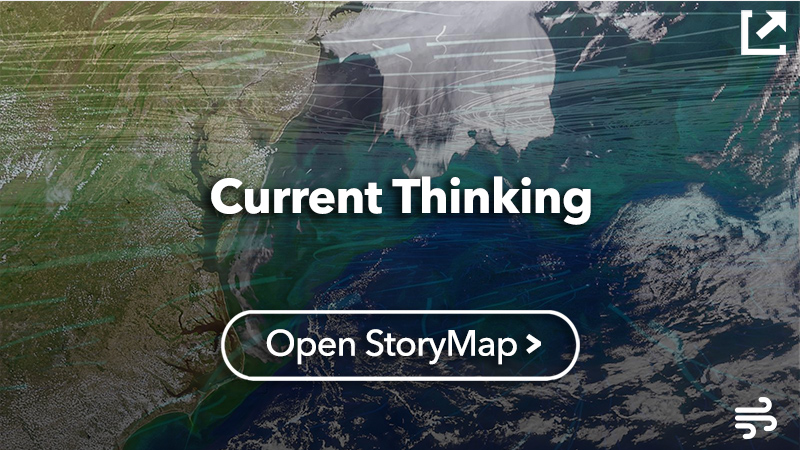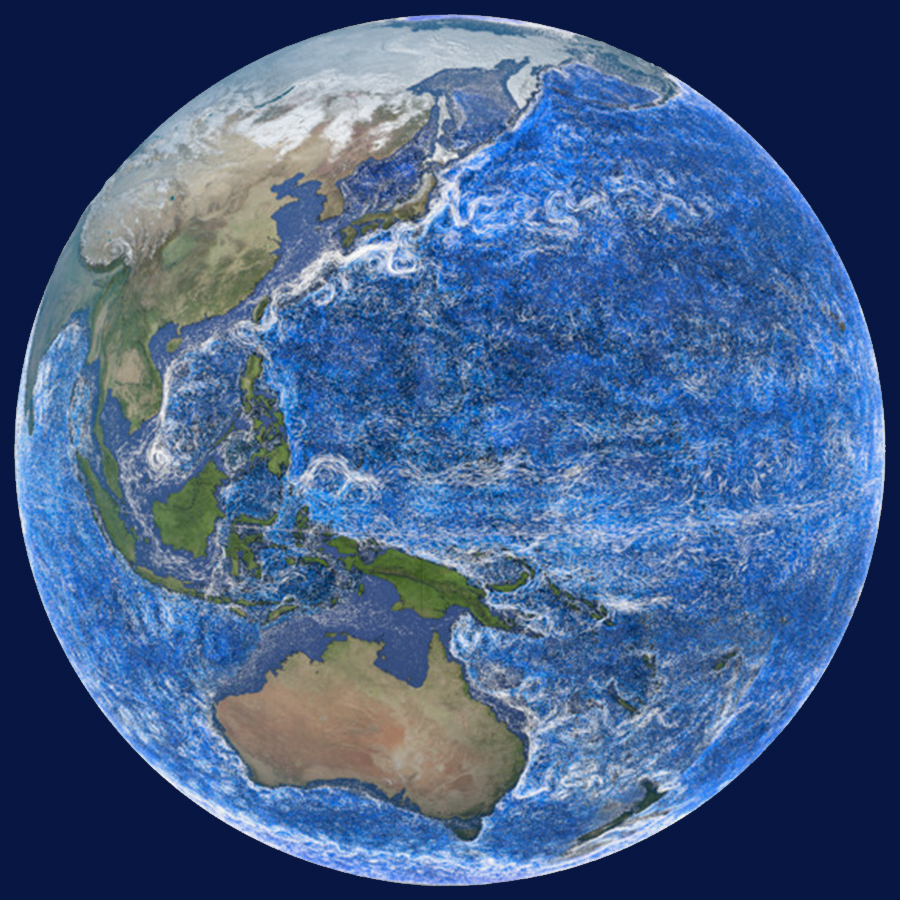



Ocean motion occurs at all depths and over a wide range of times and scales. At the surface, fast wind-driven ocean waves can last a few seconds to hours and reach lengths of tens of meters. Diving deeper into the ocean, currents slow down but can persist for thousands of years and span thousands of kilometers. This deep circulation is driven by differences between temperature and salinity. One example is the Atlantic Meridional Overturning Circulation, a notable player in our climate system that moves heat north-to-south (and back again!) in the Atlantic Ocean.
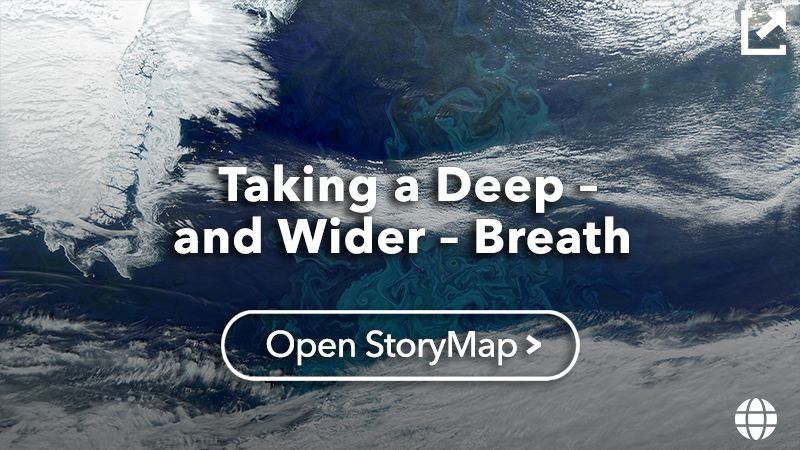
Between these extremes are swirling mesoscale eddies. Lasting weeks to months, they are usually around 100 km (62 miles) wide and can transport nutrients that sustain ocean life over long distances.
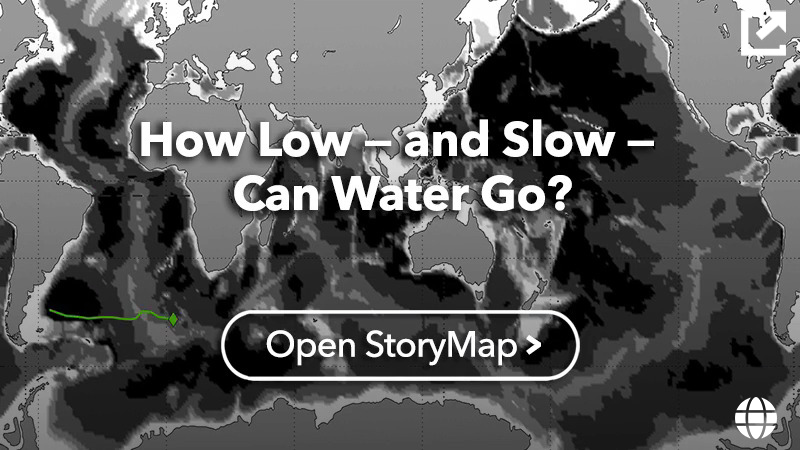
Ocean motion occurs at all depths and over a wide range of times and scales. At the surface, fast wind-driven ocean waves can last a few seconds to hours and reach lengths of tens of meters. Diving deeper into the ocean, currents slow down but can persist for thousands of years and span thousands of kilometers. This deep circulation is driven by differences between temperature and salinity. One example is the Atlantic Meridional Overturning Circulation, a notable player in our climate system that moves heat north-to-south (and back again!) in the Atlantic Ocean.
Between these extremes are swirling mesoscale eddies. Lasting weeks to months, they are usually around 100 km (62 miles) wide and can transport nutrients that sustain ocean life over long distances.

Check out these recent results!
NASA Salinity | NASA Winds | ECCO | NASA PACE